Death & Memory
The man who would not give up his home.
The baron's last day
In the spring of 1920 Soviet power came to Baku. By tradition, Red Army soldiers burst into Mukhtarov's house and rode their horses straight into his palace. For the proud master this was an unbearable insult — to let horses trample a home built out of love.
On 28 April 1920 Mukhtarov met the uninvited guests with a weapon in his hands. Refusing to surrender and give up his home to be desecrated, he shot several soldiers and then took his own life. So ended the life of a self-made man — on the threshold of an age that left no place for men like him.
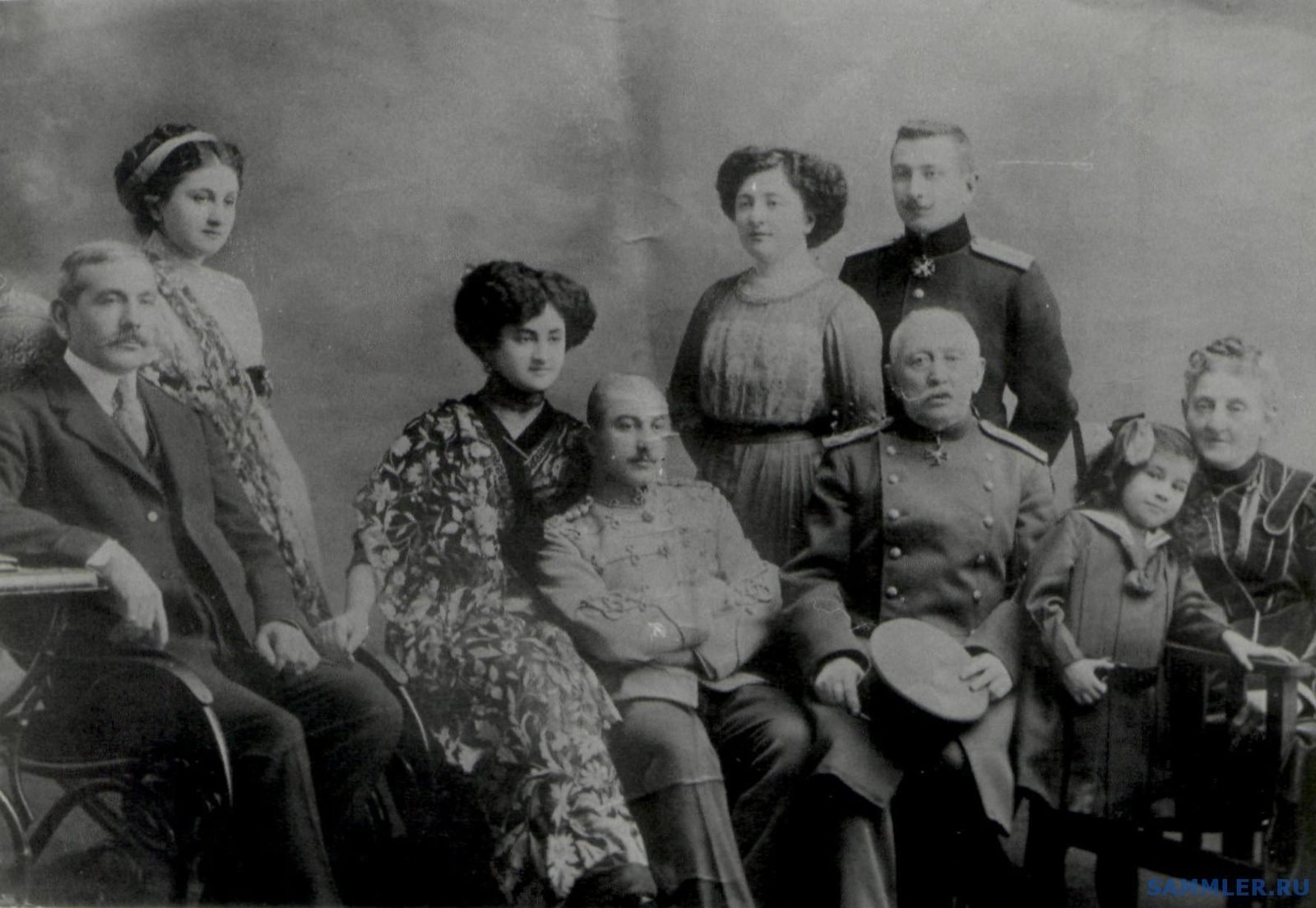
Liza and his kin
After her husband's death Liza Tuganova left Baku. The family photographs of the Tuganovs and Mukhtarovs are almost all that remains of their private life. But the story of their love, embodied in the Palace of Happiness, survived both revolution and oblivion.
What remained after him
Mukhtarov was gone, but his deeds remained: the Palace of Happiness, the mosques, the roads he opened for pupils. Today his name is the memory of a whole age of oil-boom Baku, of men who rose by their own labour, and of the tragedy that the change of times became for them.
The essentials, briefly
A Baku oil industrialist, self-taught engineer and philanthropist of the late 19th and early 20th centuries, who rose from a simple worker to the owner of a drilling firm.
For his inventions in drilling (the 'Baku Drilling System'), his philanthropy and the famous Palace of Happiness in Baku, built for his wife.
The Mukhtarov Palace (Saadat Sarayi) — a building in the French Gothic style, built in 1911–1912 by the architect Józef Plośko; today it houses the Palace of Marriage Registrations.
On 28 April 1920, as Soviet power was being established: refusing to give up his home to the Red Army soldiers, he shot several of them and took his own life.
Liza (Elizaveta) Tuganova — an Ossetian of a noble family; the palace was built for her. She founded the first Female Muslim Philanthropic Society.
The Palace of Happiness, the mosques in Amirjan and Vladikavkaz, and the memory of him as a self-made man who did not betray his dignity.
He would not give up his home — and by that turned it into a monument not only to love but to unbending dignity.